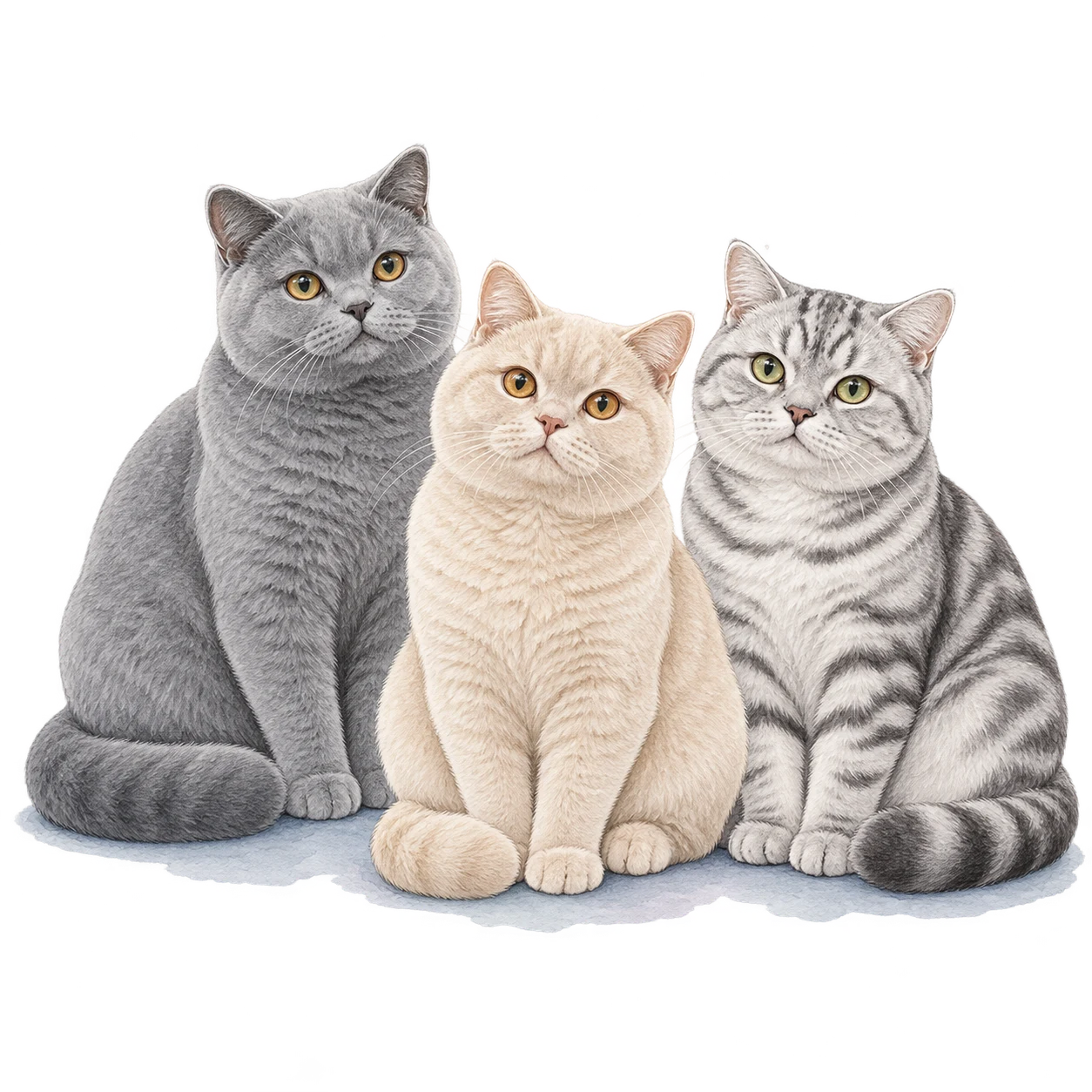
Plush, not one colour
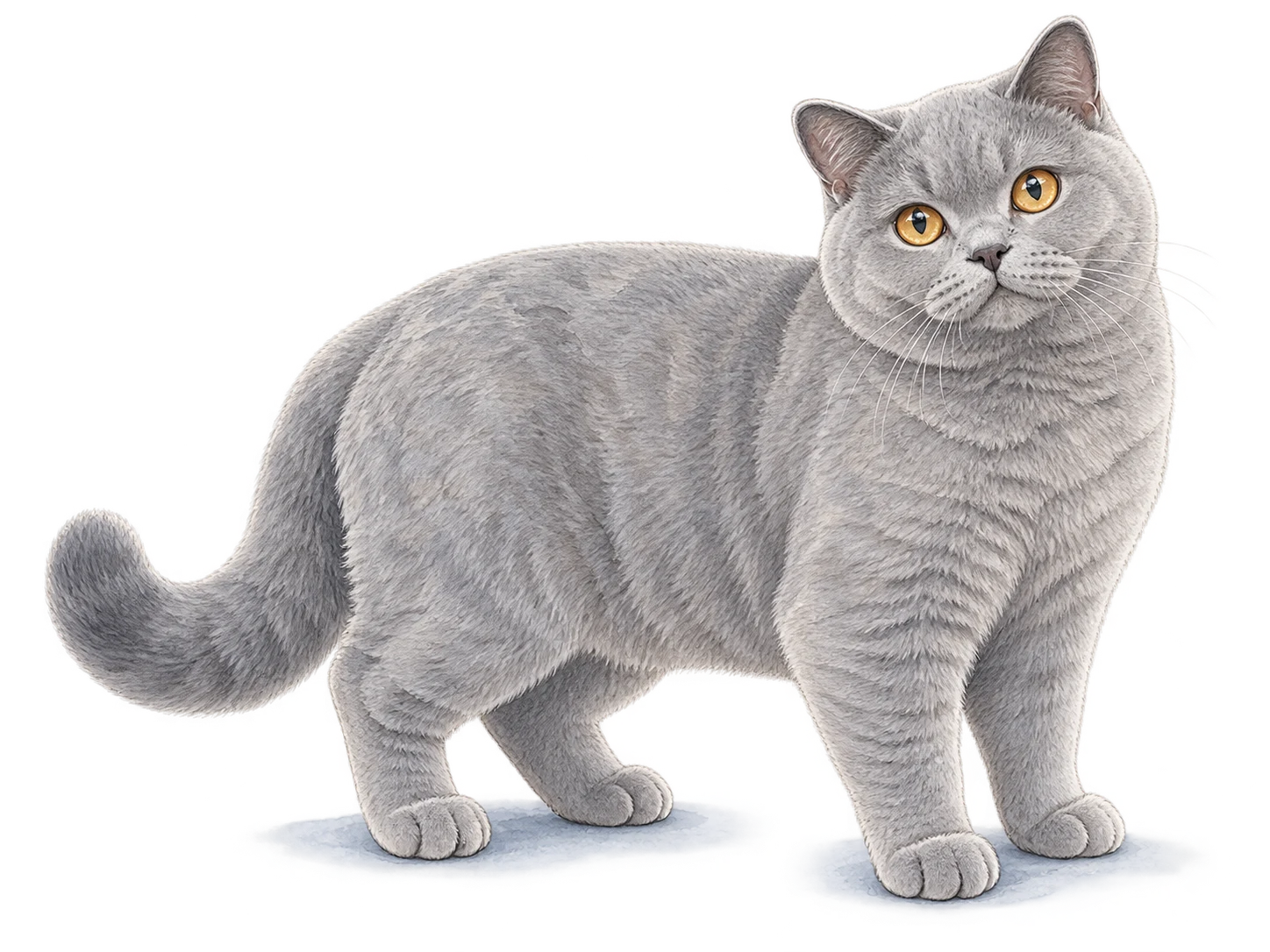
Blue-grey is iconic, yet British cats appear in many colours and patterns.

British Shorthair guide
British Shorthairs are famous for their rounded shape and plush coat. The useful part starts after that: learning what one individual cat needs to feel safe, curious and at home.
Browse the guides
The short answer
GCCF and TICA describe common tendencies, while both the first weeks at home and the cat’s own preferences shape the daily reality. Plan for choices, not a fixed personality.
Where the breed comes from
The first UK cat show at Crystal Palace in 1871 included the forerunners of today’s British Shorthair. Roman ancestry is commonly discussed, but GCCF describes it as probable rather than certain.
Read the GCCF profileBlue-grey is iconic, yet British cats appear in many colours and patterns.
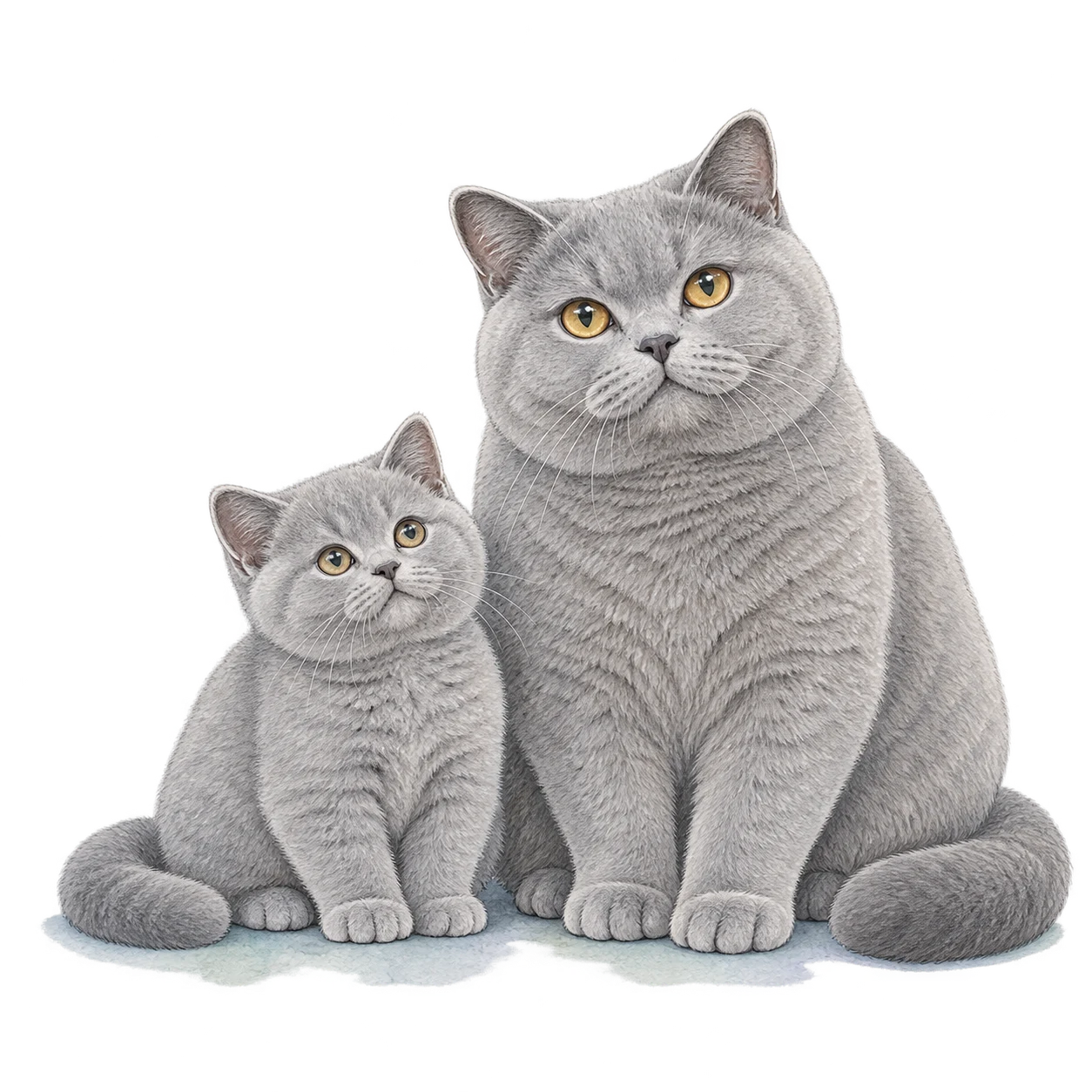
Physical development can take time. Care should grow with the individual cat.
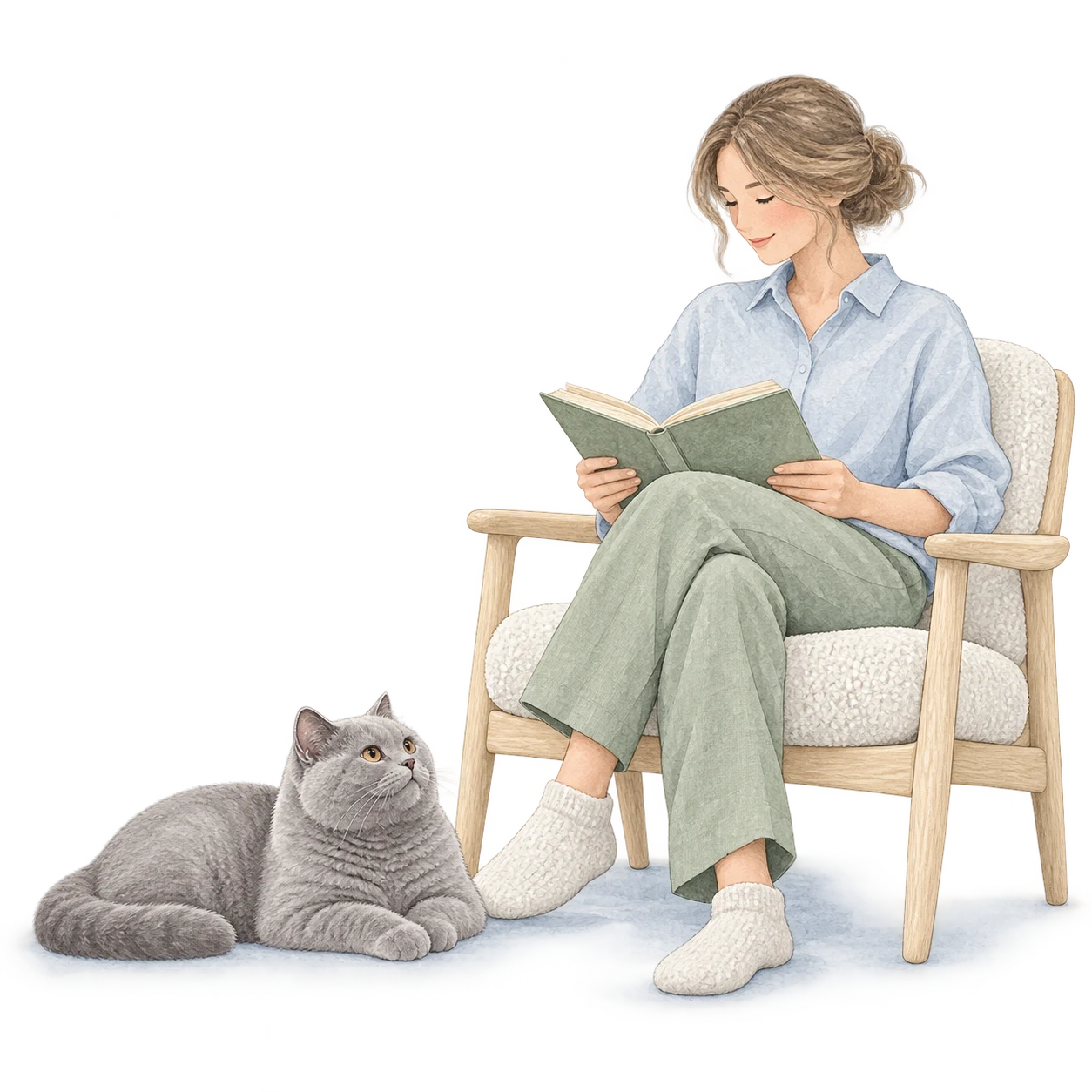
Being close is not the same as wanting to be carried. Respect the distance your cat chooses.
Little moments of connection
A plush coat isn’t an all-access pass. British Shorthair or otherwise, your cat gets the final say.
If your cat approaches and rubs against your hand, try a light stroke along a cheek or under the chin, following the fur. Many cats enjoy gentle contact around the head. Let your own cat show you what feels good.
Belly, paws and tail are sensitive areas, so they’re not good places to begin. Preferences vary from cat to cat.
Offer a relaxed hand and let your cat make the first move. If they welcome a stroke, try a few seconds, then pause. Do they lean in or rub against you again? That’s an invitation to continue gently. If they don’t, give them space.
Keep their exit open. Being nearby can be their way of enjoying your company, without wanting to be picked up or held.
Watch for a tense body, ears turning back, a flicking or lashing tail, or your cat turning or moving away. Stop touching and let them leave. You don’t need to wait for a hiss, swat or bite to know they’ve had enough.
If touch suddenly seems painful or their behaviour changes, speak to your vet rather than pushing through it.
Belly on show? Admire the fluff. It doesn’t automatically mean “please rub my tummy”.
General feline handling guidance, applied to everyday life with a British Shorthair. Individual comfort always comes first.
A useful place to start
Written by Isabela Campos-Scheffel as an editorial guide, using primary welfare and breed sources. Updated 30 October 2026.
Care before products
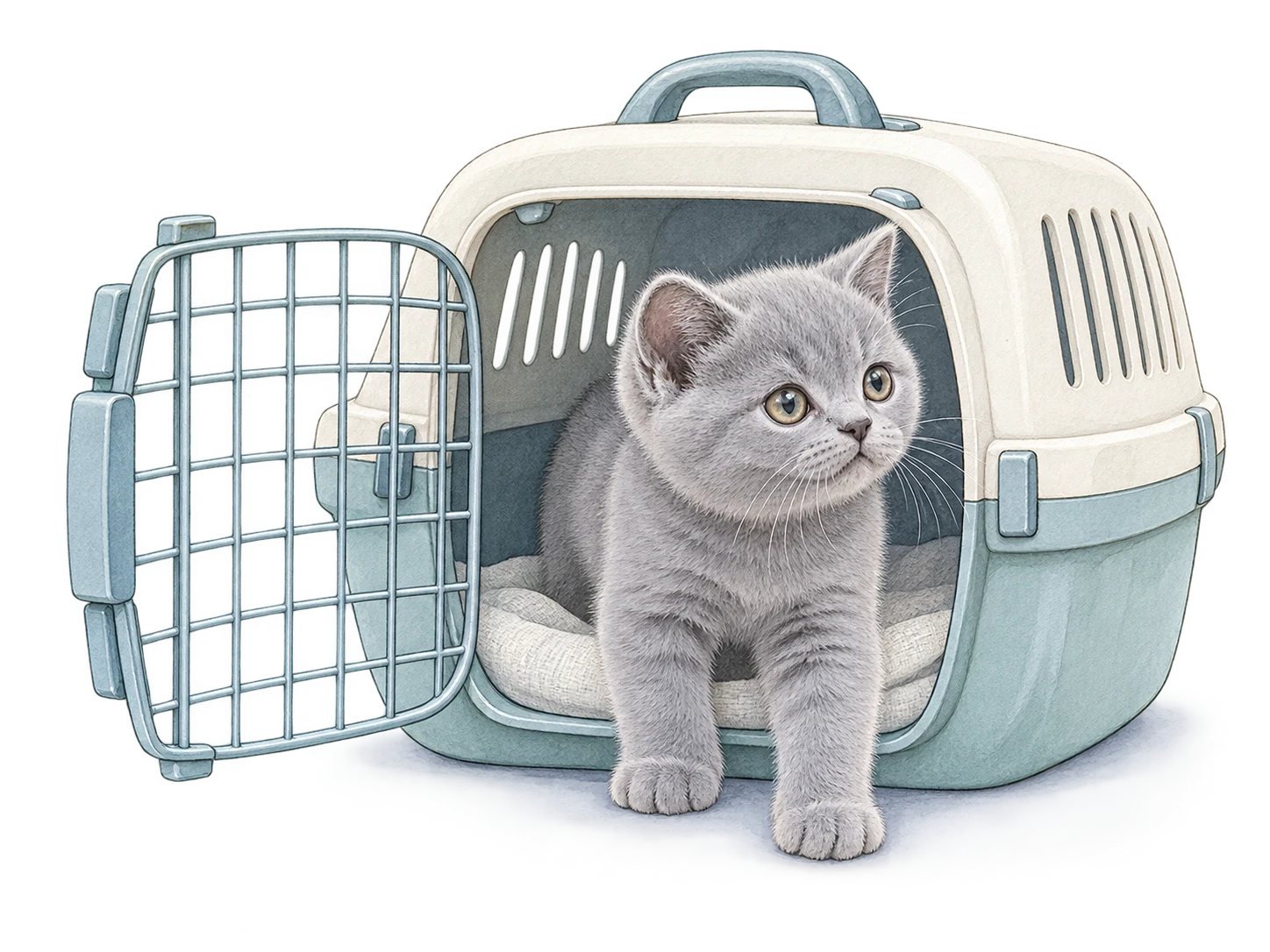
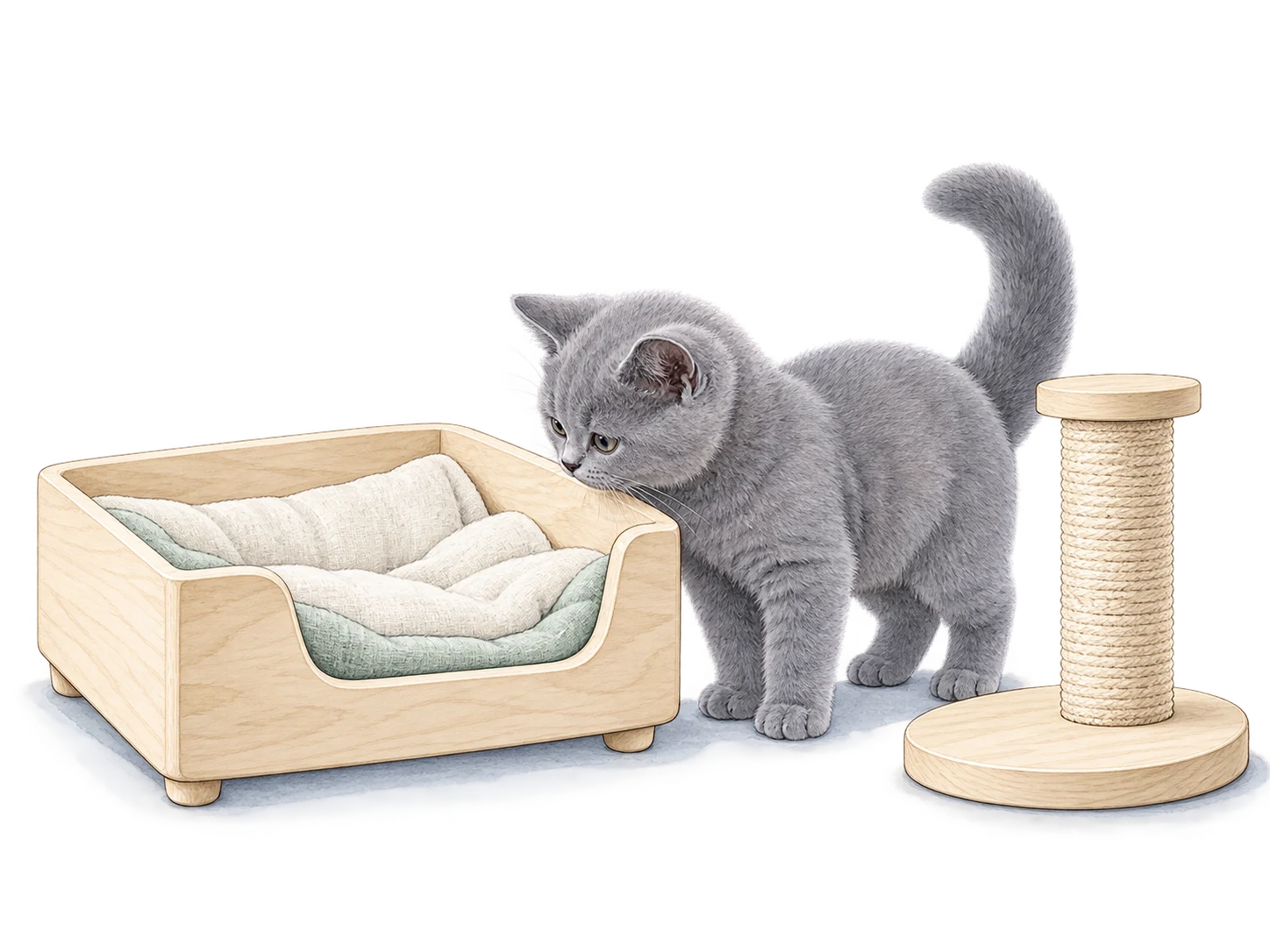
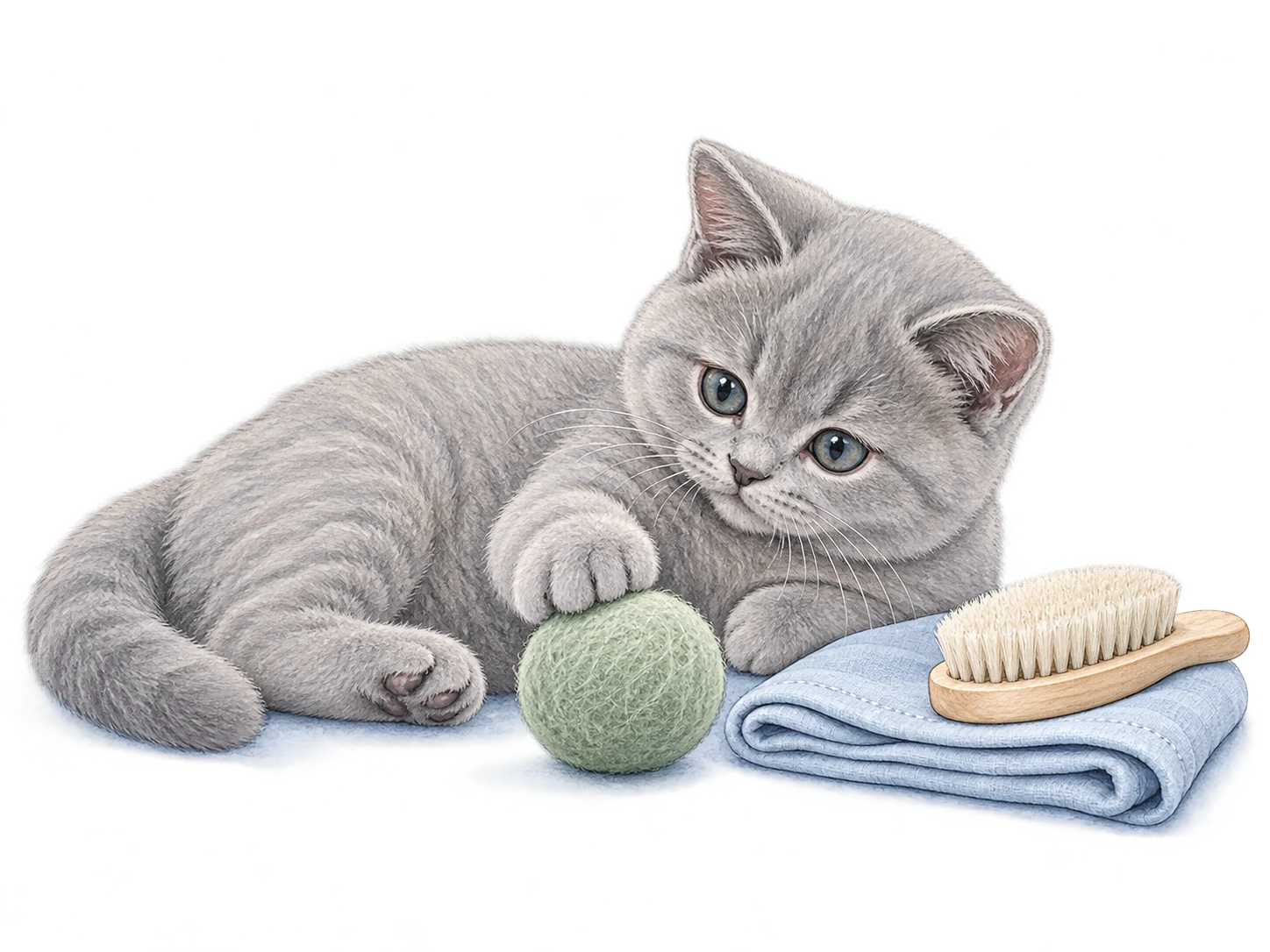
Scratching posts, a carrier, bowls and toys can make the routine more workable. They do not replace a quiet room, a clean setup, play, observation or professional advice when something feels wrong.
Visit the Wishlist