
Home guide · Checklist
Preparing your home for a kitten: what actually needs to change
A practical home-preparation guide built around safety, separate resources, rest, scratching and the small routines that make a new space easier to understand.
A cat-friendly home is less about buying everything at once and more about making basics easy to find, safe to use and calm to return to.
See the setup
One calm room. Four little zones.
Tap a spot to see why it has its own place.
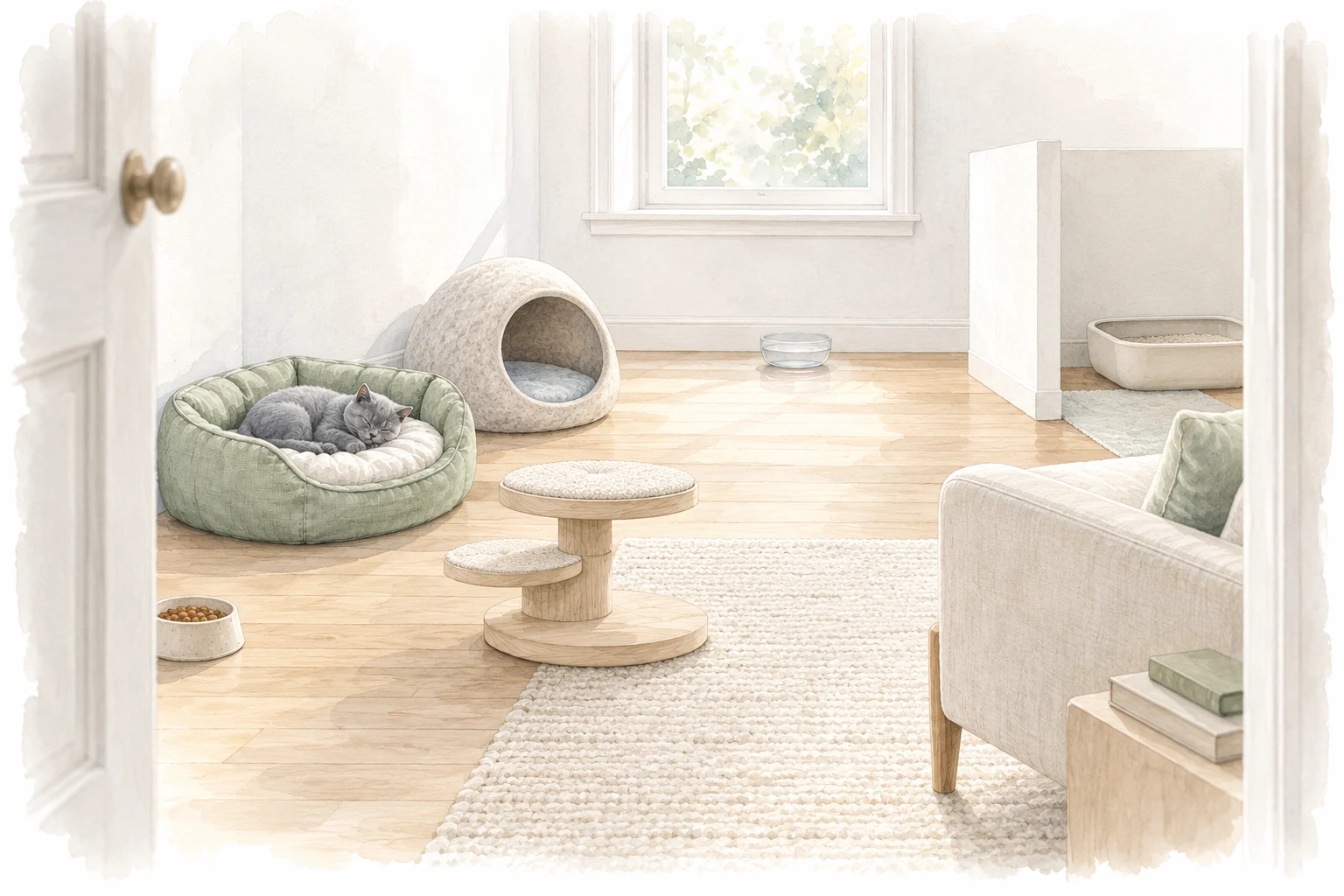
An illustrated example, not a floor plan to scale. Adapt the layout and distances to your space and your cat.
A room-level check
Look around. Little paws will.
Check your own room, one little detail at a time.
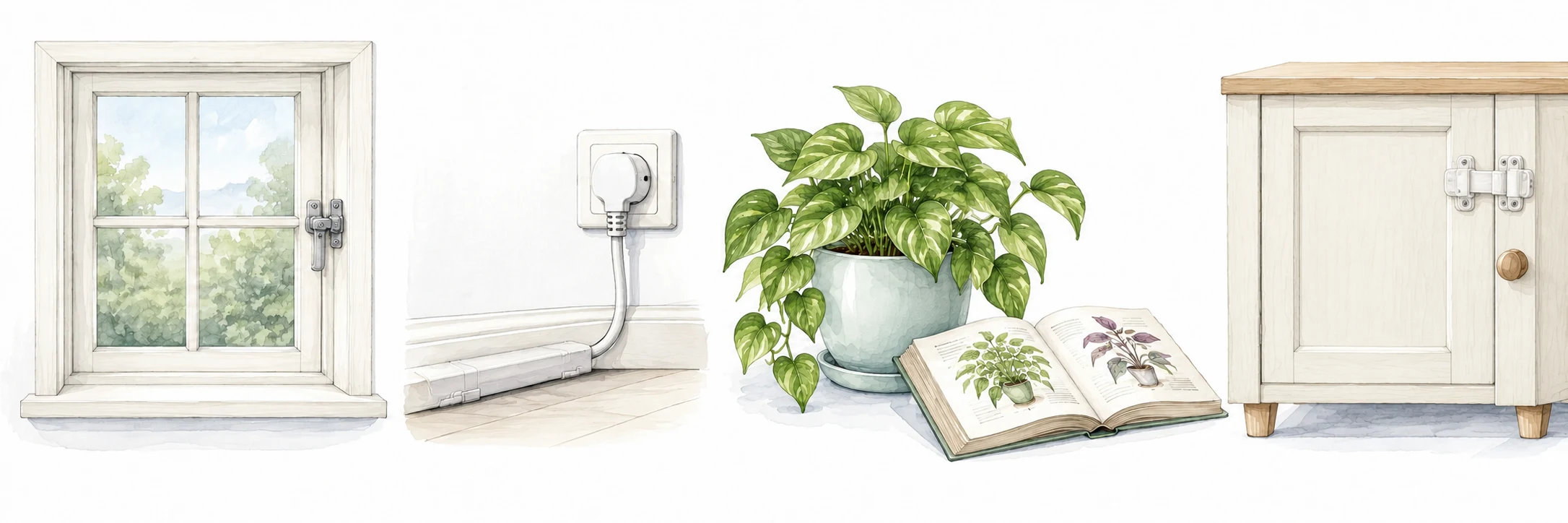
The pictured plant is a reminder to check safety, not a recommendation. These prompts do not replace a complete home check.
Care note: every cat is an individual. If something feels wrong or you are unsure about care, contact a veterinarian promptly.
Create a simple base before adding extras
- Comfortable rest
- Accessible daily resources
- A quiet base
A little more detail
Cats Protection’s arrival checklist includes complete kitten food, fresh water, separate bowls, a litter tray, a comfortable bed, hiding places, safe high places, a scratching post, toys, grooming tools, a sturdy carrier and a safe room.
Those basics are a good place to start because they support daily needs. The look of a home can follow once you know how your own cat uses it.
Keep resources separate
- Food apart from water
- Tray away from both
- Clear, calm access
A little more detail
Food, water and litter are not one station. Cats Protection advises placing food and water apart, with the tray away from both. The goal is not a perfect diagram; it is a setup that is easy for a kitten to reach without feeling exposed or interrupted.
If you live with more than one cat, each cat needs its own essential items and extra options can reduce competition. Introduce changes gradually instead of moving every resource at once.
Safety is an editing exercise
- Secure windows and cables
- Check plants and small parts
- Store chemicals away
A little more detail
Before arrival, check gaps behind furniture and appliances, loose cables, open windows, toxic plants, cleaning products, medicines and small toy parts. Kitten-proofing is not dramatic; it is a quiet sweep through the places a curious small body can reach.
Choose sturdy scratching and climbing options, then watch how the cat uses the room before making the home more complex. Automation can make a routine more functional, but it does not replace observation, play or a clean, accessible setup.
Questions readers ask
Keep the next question
close by.
Where should the litter tray go?
Choose a quiet, accessible place away from food and water, where the kitten does not have to pass something frightening or busy to reach it.
Can food and water sit together?
Separate them when you can. Keeping resources in distinct, calm places helps make each one easier to approach and observe.
What makes a scratching post useful?
Stability matters. Offer a sturdy surface in a place your cat already uses, then notice whether they prefer vertical, horizontal or angled scratching.