
Everyday care · Play & coat
Play, routine and grooming: small rituals that add up
British Shorthair play, coat care and hygiene: brushing dense fur, bathing, eyes, ears, teeth and claws, with practical guidance and primary sources.
Short play, gentle grooming and predictable care are not extras. They are ways to support natural behaviour and learn what your cat enjoys.
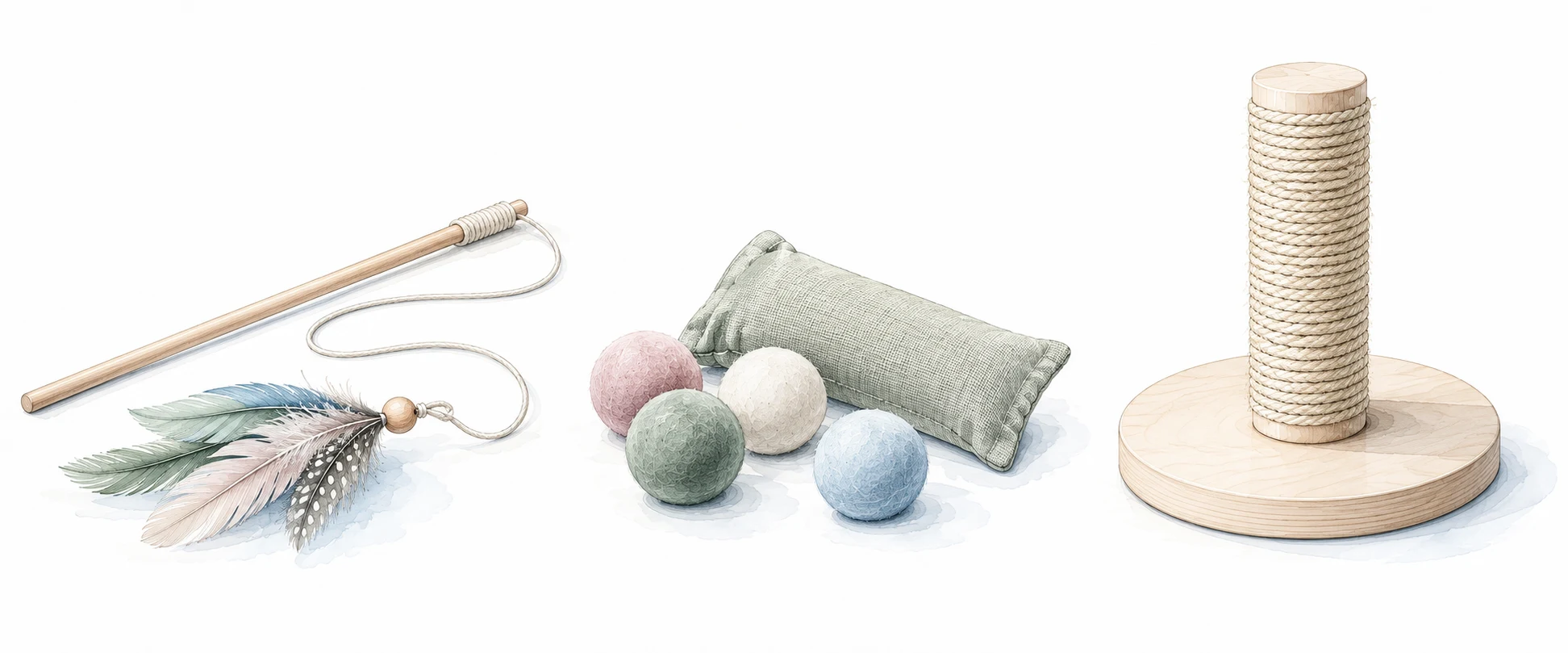
A little game, pictured
Watch. Chase. Catch. Pause.
Tap a moment to explore.

Move a toy slowly and leave room for watching and stalking.
Let your cat choose the pace. Keep hands out of the game and put string toys away afterwards.
British Shorthair · coat & hygiene
Mostly self-cleaning.
A little help from you.
A gentle routine for a dense coat, and a little care for the rest of the cat.
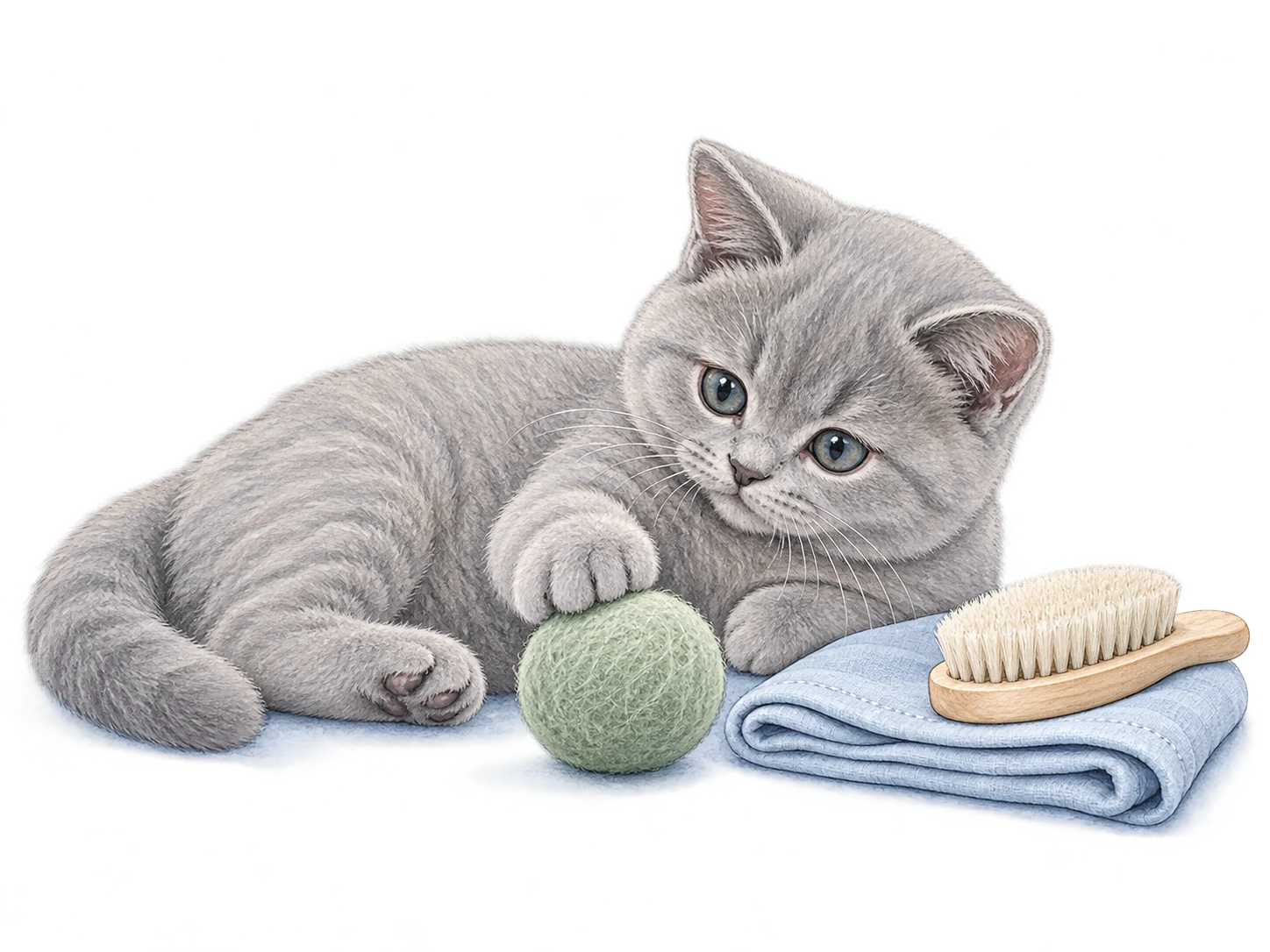
Plush coat. Gentle little brush.
The British Shorthair’s short coat is dense. Help remove loose hair, especially during moulting, without turning grooming into a wrestling match.
- A gentle weekly brush is a useful starting point; adapt to shedding and your cat’s comfort.
- Try a soft brush or grooming mitt, following the direction of the fur. Begin with a few strokes and let your cat move away.
- Older cats may need more help. Ask for professional help with tight mats rather than cutting them out with scissors.
Usually, the tongue has it covered.
A healthy British Shorthair does not need routine shampooing just because the coat looks plush.
- For a small ordinary dirty patch, a soft cloth dampened with warm water may be enough.
- If something potentially toxic gets on the coat, call your vet promptly for instructions.
- When washing is actually needed, ask what is appropriate. Choose cat-specific products rather than human shampoo.
A little look before a little clean.
Checking is useful. Healthy ears do not need routine cleaning unless your vet has advised it.
- For a little crust at the eye corner, wipe gently with damp cotton, using a fresh piece for each eye. Avoid rubbing the eye or using unprescribed drops.
- Squinting, redness, cloudiness or discharge need prompt veterinary advice.
- For dirty, waxy, smelly or uncomfortable ears, ask your vet before cleaning. Never put cotton buds into the ear canal.
Little teeth deserve a routine too.
Introduce brushing gradually with a suitable cat toothbrush and toothpaste made specifically for cats.
- Ask your vet to demonstrate a gentle technique and build acceptance in small steps.
- Use cat toothpaste, never human toothpaste.
- Painful gums, bad breath, drooling or changes in eating deserve a vet check. Brushing painful, inflamed gums can hurt.
Scratch, stretch, check.
Offer stable scratching places and keep an eye on claw condition, especially as your cat grows older or becomes less active.
- Claw trimming is individual, rather than an automatic appointment for every cat.
- Ask a vet nurse to show you what needs trimming and how to avoid the sensitive part of the claw.
- Use appropriate cat clippers if advised. Let the practice help when you or your cat are uncomfortable.
Sources checked 30 October 2026. Coat care reflects the breed’s dense fur; eye, ear, dental and claw care are general feline needs.
Care note: every cat is an individual. If something feels wrong or you are unsure about care, contact a veterinarian promptly.
Play is practice, not a distraction
- Stalk, chase and catch
- Keep hands out of games
- Put string toys away
A little more detail
Cats Protection describes play as important for wellbeing, development and mental stimulation. Toys that invite stalking, chasing, pouncing and batting can give a kitten safe ways to practise natural behaviour.
Short, regular sessions are useful. Keep hands and feet out of the game, check toys for wear and do not leave a kitten alone with anything that could be swallowed or cause tangling.
Build a routine around observation
- Predictable care
- Short chances to play
- Time to rest and observe
A little more detail
A routine gives a new cat useful predictability: meals, quiet periods, play, litter care and rest can happen in a pattern that the household can actually maintain. The best routine is not the busiest one; it is the one that leaves room to notice appetite, energy, sleep and preference.
Indoor cats often benefit from more ways to play and explore. Rotate safe toys rather than filling every corner at once, and change the setup slowly enough to see what is working.
Grooming can be a quiet check-in
- Introduce the brush slowly
- Keep sessions brief
- Notice changes
A little more detail
Cats Protection recommends introducing brushes and combs gradually, with little restraint and short sessions. A short-haired cat may need a weekly brush, with more help during seasonal shedding depending on the individual.
Use grooming to notice what is normal for your cat. A sudden change in grooming habits, skin condition or coat quality deserves a conversation with a veterinarian rather than an internet diagnosis.
Questions readers ask
Keep the next question
close by.
How can I tell when play is too much?
Pause when a kitten moves away, loses interest, becomes frustrated or starts using hands and feet as targets. Short, calm sessions are easier to repeat than one overstimulating game.
How do I introduce a brush?
Let the cat investigate it first, then try a few gentle strokes in a relaxed moment. Stop before discomfort and build positive, very short sessions over time.
Which toys should not be left out unsupervised?
Put away anything damaged, small enough to swallow or likely to tangle. Check each toy regularly and choose supervision when a toy has string, loose parts or uncertain durability.