
British Shorthair · Start with the breed
British Shorthair: history, temperament and the cat in front of you
A grounded introduction to the British Shorthair — where the breed came from, what its dense coat and slower development can mean, and why personality still belongs to the individual cat.
British Shorthairs are often described as calm, sturdy companions with a plush coat. That is useful context, not a personality forecast: the most useful thing you can bring home is curiosity about your own cat.
The breed, at a glance
Three clues. One individual cat.
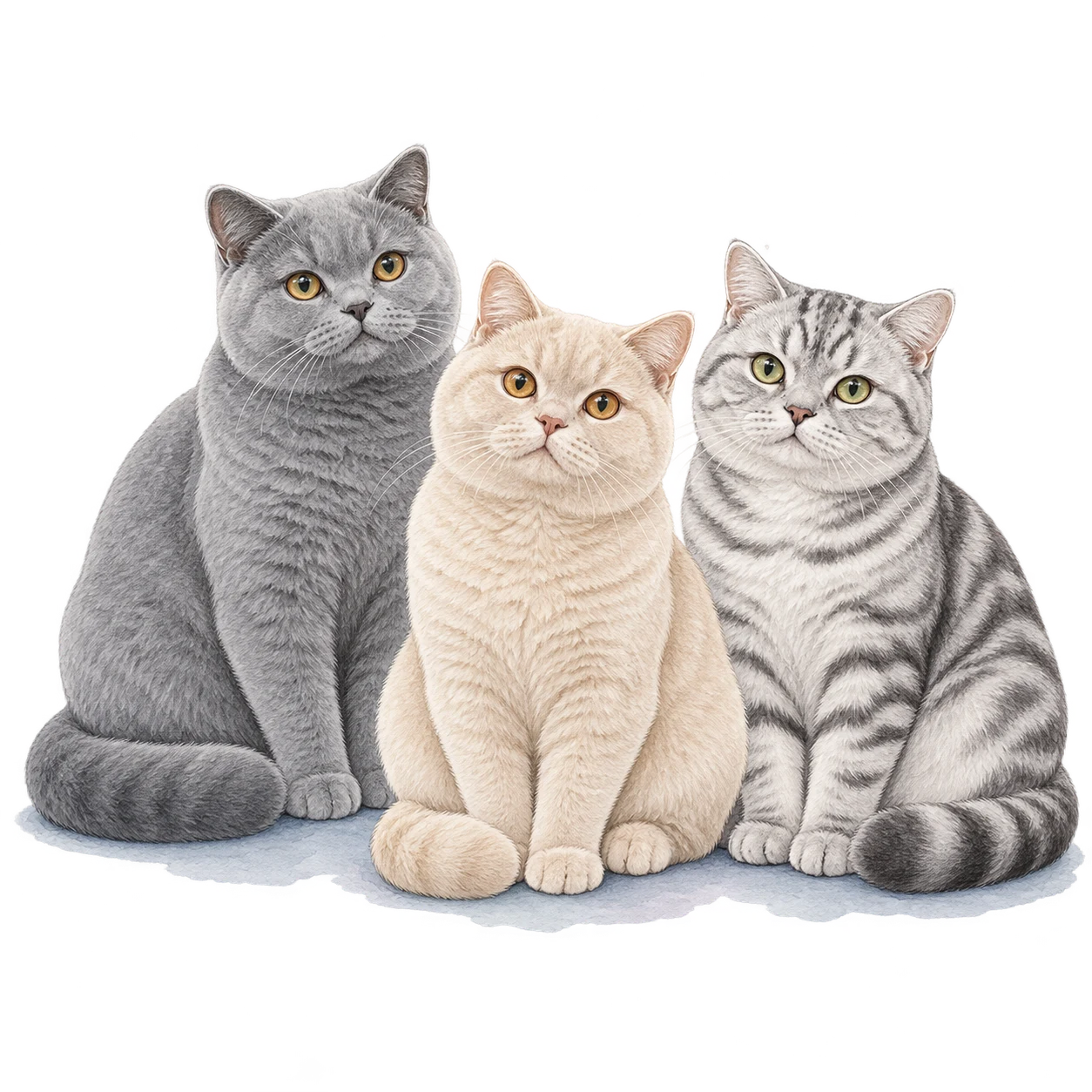
A plush coat
A dense short coat, in many colours and patterns.
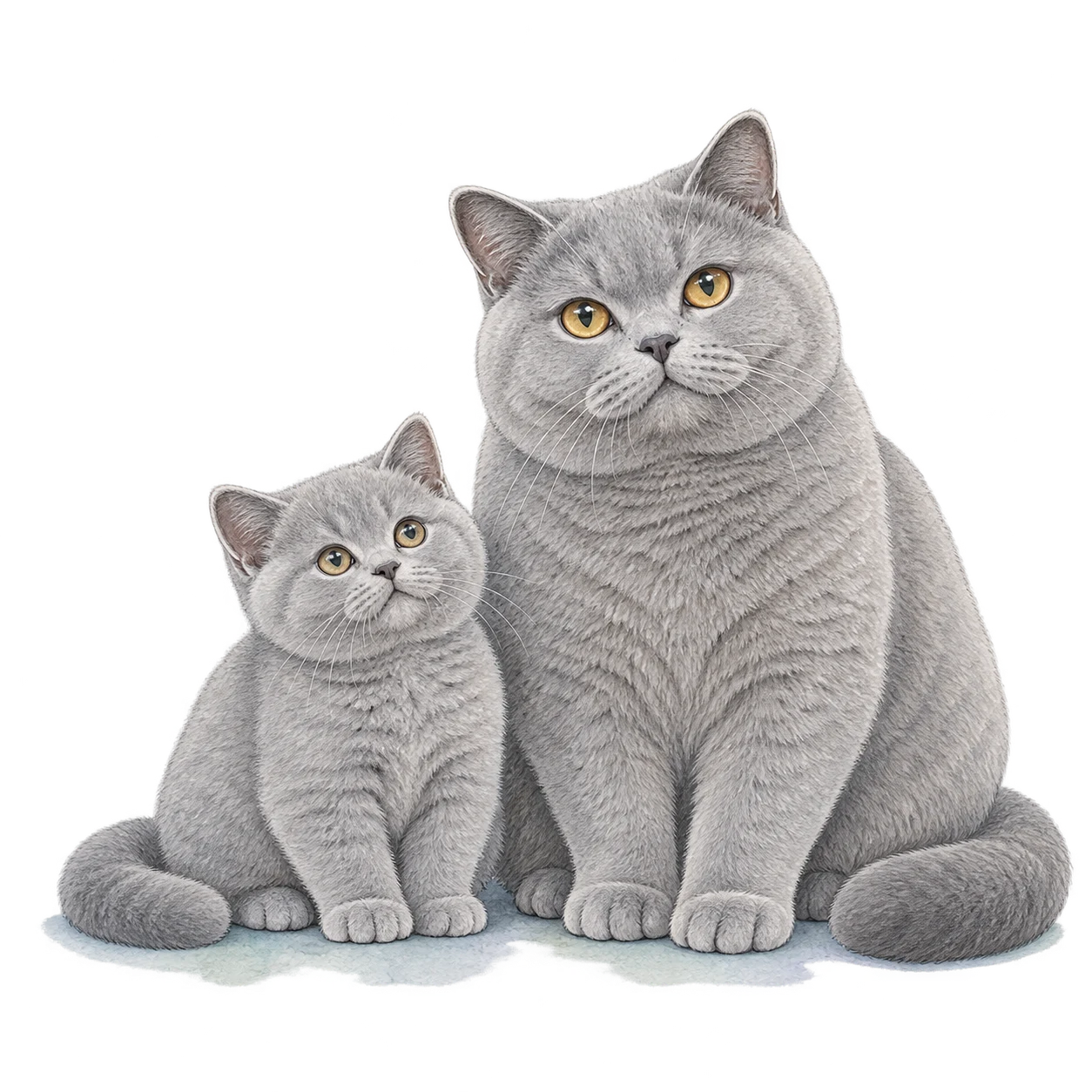
Care grows with the cat
Age, health and present abilities belong in the picture.
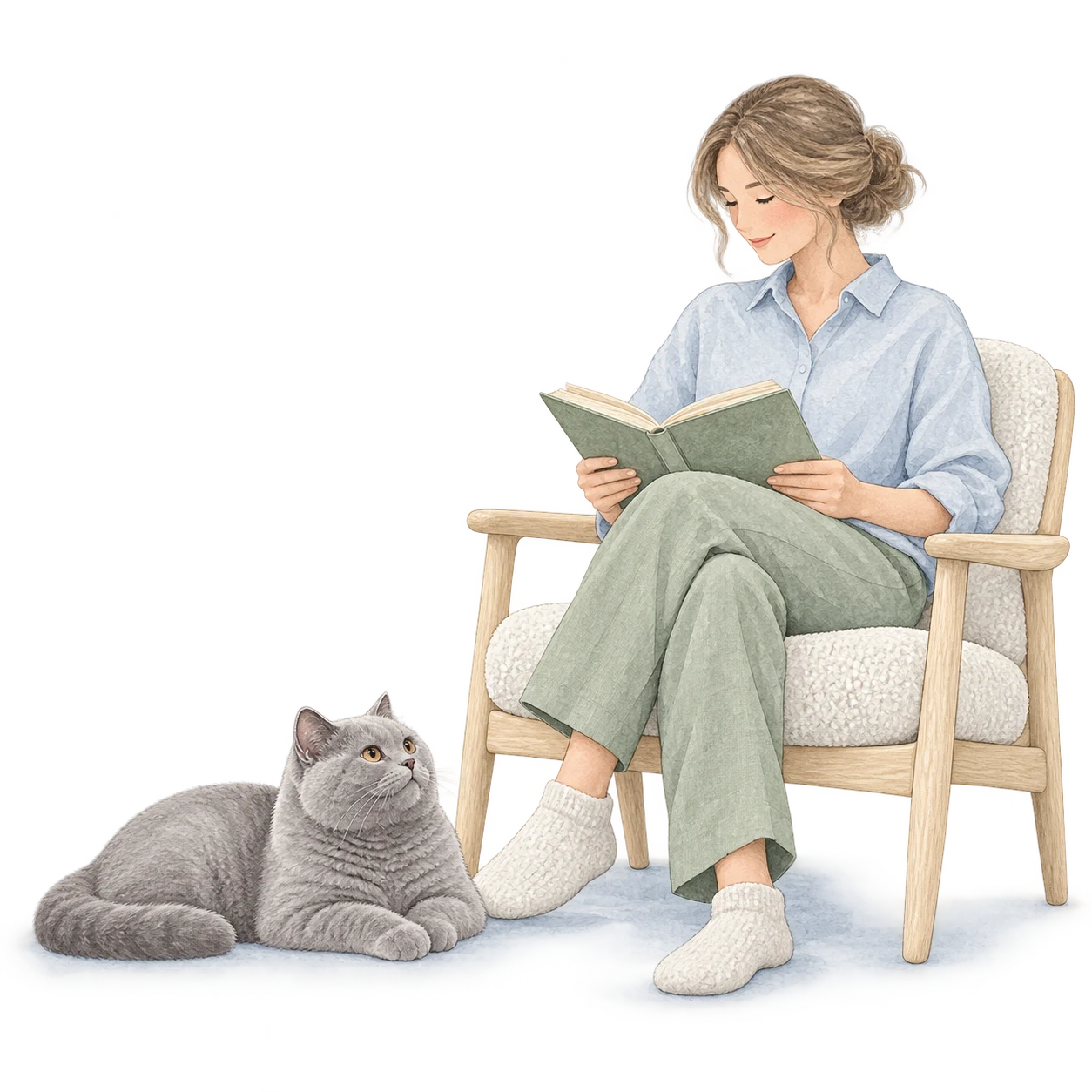
Their own terms
Nearby company can matter more than being carried.
Care note: every cat is an individual. If something feels wrong or you are unsure about care, contact a veterinarian promptly.
A long story, told carefully
- Documented show history
- More colours than blue
- Keep ancestry claims careful
A little more detail
The British Shorthair’s documented show history reaches back to the first UK cat show at Crystal Palace in 1871. The GCCF traces the modern breed to familiar British domestic shorthairs and says a Roman connection is probable rather than certain — a good reason to keep the story interesting without turning it into certainty.
Blue-grey is the colour many people picture first, but British cats appear in many colours and patterns. The rounded outline, dense plush coat and sturdy body are part of the breed picture; none of them tells you whether your own cat will be bold, quiet or ready for company on day one.
Temperament is a starting point, not a script
- Company can mean nearby
- Respect handling preferences
- Observe the individual
A little more detail
Breed descriptions commonly mention calm company and an independent streak. TICA also notes that many British Shorthairs prefer to settle nearby rather than be carried or held for long. Take that as an invitation to notice consent and body language, not as a rule every cat must follow.
A new home, early socialisation, health, age, routine and the people around a cat all shape daily behaviour. Give your cat places to be close, places to be alone and time to decide which one feels right.
The practical implications
- Care grows with age
- Introduce gentle grooming
- Choose for your own cat
A little more detail
The GCCF notes that British cats develop slowly and can take up to five years to reach physical maturity. That does not turn one feeding plan or one product into a universal answer. It is a reminder to choose age-appropriate care with your breeder and veterinary team, then adjust as your own cat grows.
Their dense coat is part of the appeal. A gentle routine with a suitable brush can become an easy way to notice seasonal shedding, preferences and changes worth discussing with a professional.
Questions readers ask
Keep the next question
close by.
Do British Shorthairs like being picked up?
Some tolerate or enjoy brief handling; many prefer companionship beside you. Offer support, watch body language and let the individual cat decide when enough is enough.
Why does my British kitten sit beside me rather than on my lap?
Nearby company can still be affectionate. A cat who chooses the same room, a cushion close by or a slow approach is communicating in their own way.
How much grooming does a plush short coat need?
Introduce a brush gradually and keep sessions brief. Weekly brushing may suit many short-haired cats, with seasonal changes depending on the individual and their comfort.