
Arrival guide · First week
Bringing home a British Shorthair: the first week, gently
A calm, practical first-week guide: prepare one quiet room, let your kitten set the pace and make the first routines simple enough to repeat.
The first week is not about introducing every room or every visitor. It is about giving a kitten a predictable, quiet base and enough time to choose the next step.
The first week, pictured
Small steps. At their pace.
Tap a moment to explore.
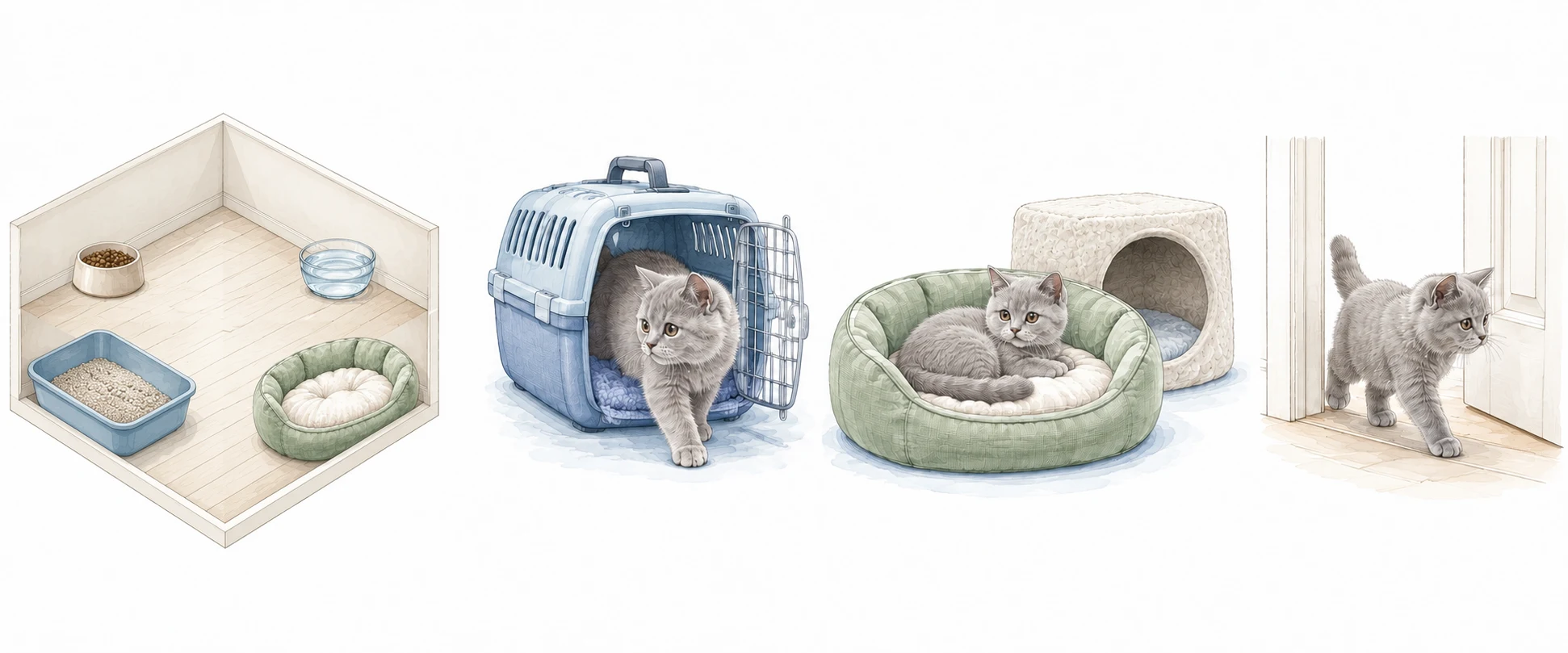
Set up the quiet room before the carrier arrives.
Phases, not fixed days. Every kitten settles at a different pace.
See the setup
One calm room. Four little zones.
Tap a spot to see why it has its own place.
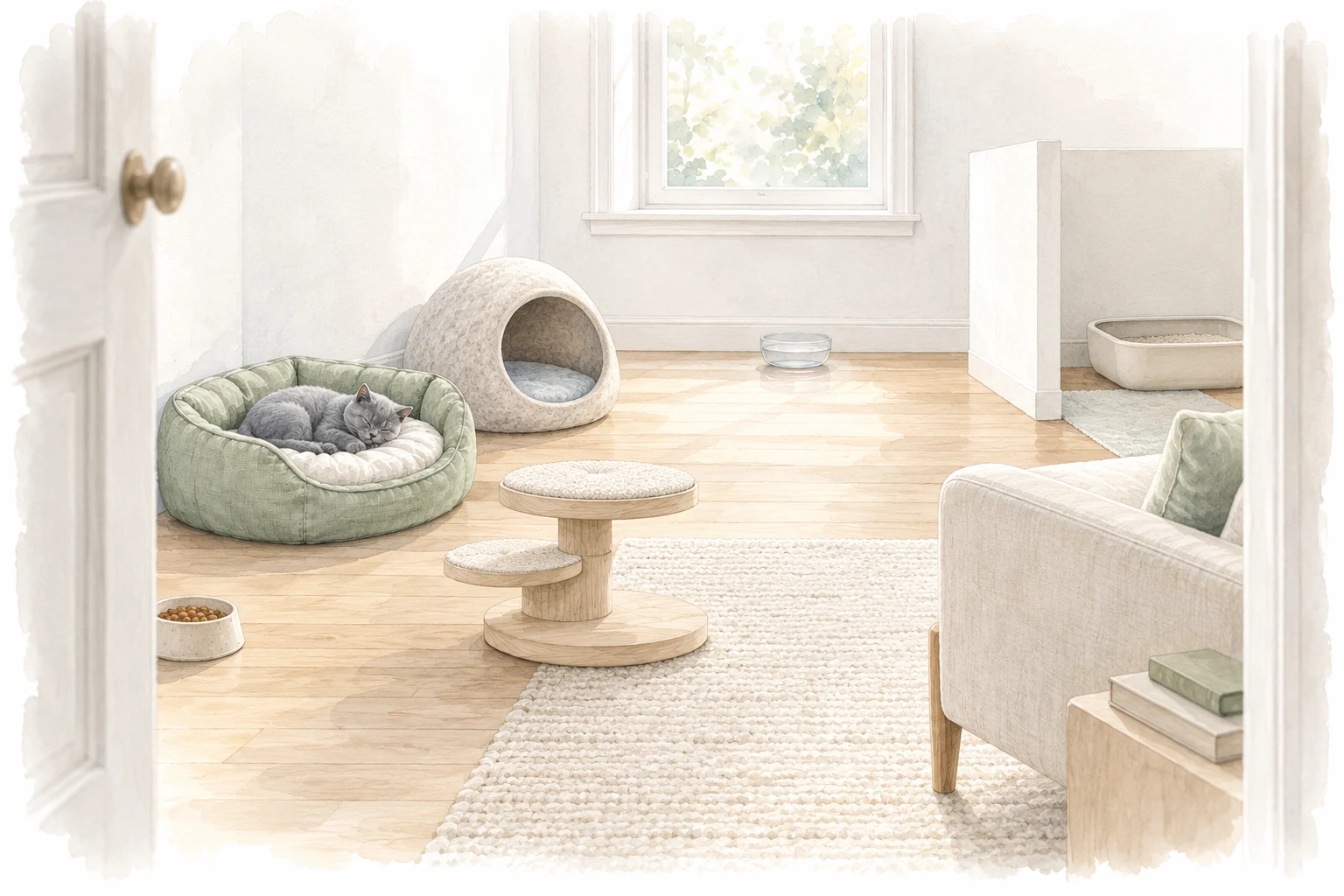
An illustrated example, not a floor plan to scale. Adapt the layout and distances to your space and your cat.
Care note: every cat is an individual. If something feels wrong or you are unsure about care, contact a veterinarian promptly.
Before arrival: make one room easy to read
- A bed and hiding place
- Separate food, water and litter
- A familiar starting point
A little more detail
Cats Protection recommends a quiet, escape-proof sanctuary room away from the busiest parts of the home. Set it up before arrival with a bed, hiding places, a safe high place, a scratching option, toys and space to move.
Place food and water apart from each other, and keep the litter tray away from both. If possible, begin with the food and litter a kitten already knows; changes are easier when made gradually.
The first hour: let the carrier open quietly
- Carrier at floor level
- Open the door quietly
- Let the kitten step out
A little more detail
Bring the carrier directly into the safe room, close the door and open it at floor level. Let your kitten come out when ready. Do not pull them out, chase them from a hiding place or make a tour of the home feel like a deadline.
Sit nearby if the kitten is curious, speak softly and keep the room uncomplicated. The useful first-hour goal is not contact on demand; it is a calm place where food, water, litter and hiding options are easy to find.
The first night: keep the base familiar
- Familiar food and scent
- Resources easy to reach
- A calm place to sleep
A little more detail
For the first night, keep the safe room calm, kitten-proofed and ready to use. Leave a comfortable resting place, water, litter and familiar bedding or scent if the breeder has supplied it. A quiet check is kinder than repeated interruptions.
Ask the breeder about the routine your kitten already knows. The new household does not have to copy every detail, but familiar food, litter and a predictable wind-down can make the change easier to understand.
Expand gradually, using your kitten’s signals
- Watch eating and resting
- Notice calm curiosity
- Expand gradually
A little more detail
Wait for signs that the room is becoming familiar: eating, drinking, using the tray, resting and choosing to explore when you enter. Then offer one additional quiet area at a time, with the safe room still available as a retreat.
Use the week to observe rather than to optimise. Notice where your kitten rests, which play style they choose and when they ask for distance. A small written note can make patterns easier to see without turning the first days into a test.
Before the carrier arrives
A short, calm checklist.
0 of 5 checked
Questions readers ask
Keep the next question
close by.
Where should my kitten sleep on the first night?
Start with the prepared safe room: a quiet, kitten-proofed space with a comfortable bed or hiding place, water and litter. Keep the setup calm and take cues from the familiar routine discussed with the breeder.
How long should they stay in the safe room?
There is no useful fixed deadline. Expand access gradually when your kitten is eating, resting, using the tray and showing calm curiosity, while keeping the original room open as a retreat.
Should I invite visitors?
Give the kitten time to settle first. When visits do happen, keep them brief, quiet and optional for the cat; no one should pull a kitten from a hiding place or insist on handling.