
Life in Germany · the practical little things
Cat care in Germany.
The useful little details.
Passport, chip, vaccinations and vet cover: different jobs, one well-prepared human. Here’s what each means — and which questions to ask next.
Sources checked 30 October 2026 · for all cat breedsThree things. Three different jobs.
The paperwork.
And the little chip behind it.
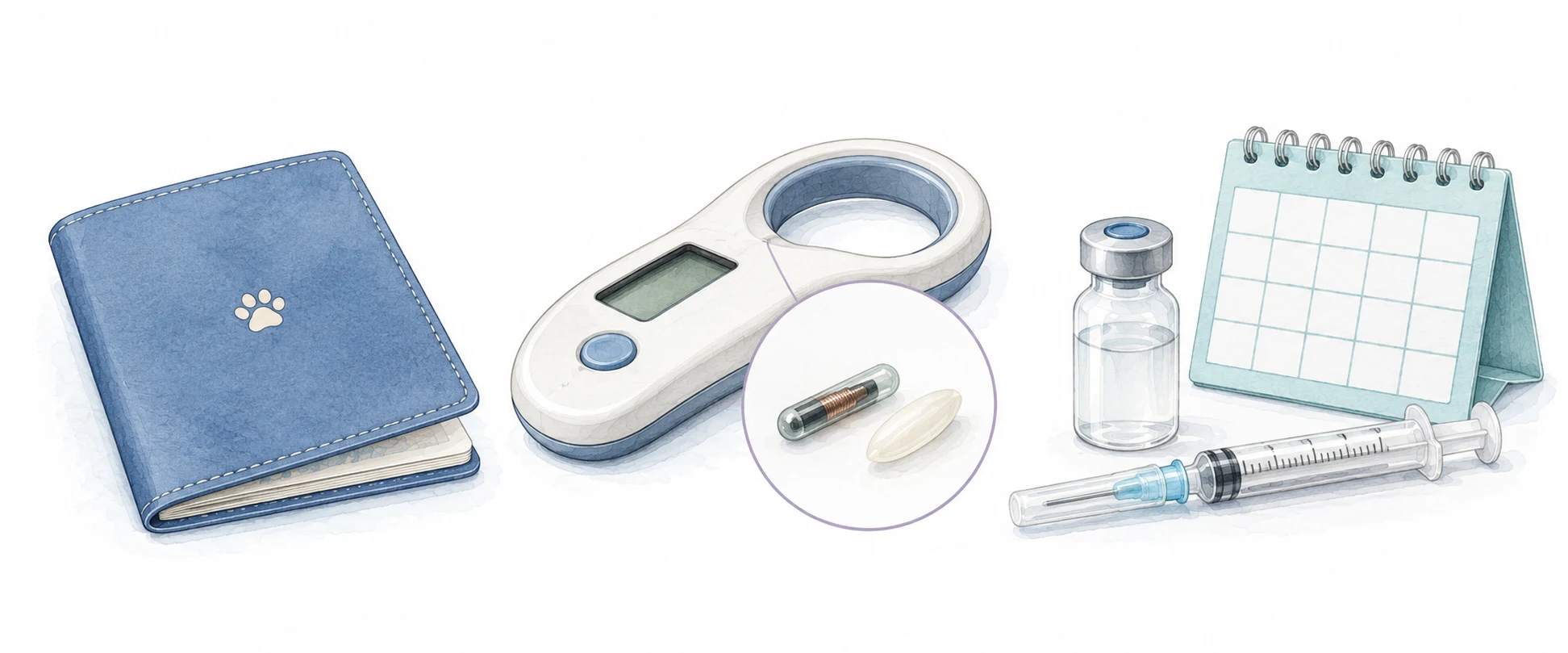
A passport for the paws.
EU-HeimtierausweisAn EU travel document linking your cat’s identity to its recorded rabies vaccination. An authorised vet issues it.
What is inside — and what isn’t?
Owner and animal details, identification number and vaccination entries. It is not a pedigree certificate, insurance policy or an app profile.
A normal vaccination booklet (Impfpass) is not a substitute for the travel passport. The EU passport can also hold routine vaccination records.
Keep the original for travel. A photo or app copy is useful for organisation, but does not replace the required document.
A tiny chip. A useful connection.
Mikrochip + RegistrierungThe chip stores an ID number. A separate registry connects that number to your contact details.
Is my cat automatically registered?
Do not assume so. Confirm the registry entry and the recorded contact details, even if a breeder or vet arranged the chip.
TASSO offers free registration. Update the record when your contact details or the keeper change.
A plan, not just a stamp.
Impfungen + GrundimmunisierungVaccines prepare immune protection. A kitten’s first course and later boosters have different roles.
Which vaccines are we talking about?
StIKo Vet identifies protection against feline herpesvirus (R), calicivirus (C) and panleukopenia (P) as core for cats. You may see these letters together as RCP.
Other vaccines, such as FeLV, depend on exposure and individual risk. Rabies has a separate role in travel requirements.
Your vet reviews age, existing records, health, exposure and the vaccine used before setting dates.
Make the connection
Chip → scan → a way home.
Tap each step. Implanting a chip and registering it are separate actions.
A number that stays with your cat.
A vet places a rice-grain-sized transponder under the skin. It contains an identification number, not your address and not a GPS tracker.
Understand the first course
Little appointments. A longer plan.
- 8 weeksFirst core dose
- 12 weeksNext core dose
- 16 weeksFurther core dose
- 15 monthsCourse follow-up
An example kitten core-vaccine schedule from the StIKo Vet 2025 guideline. Maternal antibodies can interfere with early doses, which helps explain the repeated appointments. This is not a prescription for your cat. Existing doses, product instructions and individual circumstances may change the plan; later boosters are set with your vet.
Crossing an EU border?
The order matters.
- 01Identify
Microchip before the rabies vaccination used for travel; the vet checks the ID.
- 02Vaccinate
First rabies vaccination from 12 weeks of age, following the product protocol.
- 03Wait
At least 21 days after completion of the primary rabies vaccination protocol.
- 04Check the route
Valid passport entries, destination rules and the carrier’s own conditions.
What if a booster is late, or we travel beyond the EU?
A lapse can mean a new waiting period. Travel outside the EU — and re-entry — may need additional certificates or a rabies antibody test. Check the actual route well before booking.
This overview is for ordinary non-commercial journeys with your own cat. Buying, selling or transferring an animal can involve different rules. The passport alone does not guarantee airline, train or bus acceptance.
Care, costs & a little planning
A good vet.
A clearer plan for the bill.
Find your regular practice, save the out-of-hours contact and bring existing health records to the first visit.

Compare the approach
Three ways to plan. Different trade-offs.
Focuses on eligible operations. Check which diagnostics, anaesthesia and aftercare are included.
Ask yourself: What counts as a covered operation, and which costs around it are included?
Six details to read before signing
- Waiting periods
- Deductible or co-payment
- Annual limits & reimbursement rate
- GOT rate & emergency-fee coverage
- Pre-existing, hereditary & dental exclusions
- Premium changes & cancellation terms
Check preventive-care allowances separately. If a practice offers a monthly care plan, ask whether it is insurance or a package of specified services.
One German abbreviation worth knowing
GOT: how the fees are structured.
The national veterinary fee schedule sets fees for individual services, rather than one fixed price for a visit.
The factor depends on the circumstances and service. Medicines, materials, laboratory costs and VAT can add to the total.
An explanation of the general structure, not an estimate or calculation of your cat’s bill. Ask the practice about likely costs and ask an insurer what it reimburses.
Germany has local details too
Your postcode belongs in the picture.
Outdoor-cat rules
Some areas require neutering, identification and registration for cats with free outdoor access. Check your municipality’s Katzenschutzverordnung or ask the local Veterinäramt.
A concrete example: Hamburg
From 1 January 2026, Hamburg requires cats given outdoor access to be neutered, microchipped and registered. That is a local example, not a rule to apply unchanged to every German address.
Current rules, future phases
The EU adopted broader identification and registration legislation in 2026 with phased application. Do not assume every new requirement started at once.
Travel requirements and existing local rules still need to be checked for your situation now.
Less mystery. More prepared.
Your first little admin check.
0 of 6 checked
General information checked against the linked sources on 30 October 2026. Your vet sets the individual care plan; the relevant authority and current policy terms determine the rules that apply.